

The Western Australian mining and resources industry contributes to 39% of gross state product in 2024-25, with $33 billion worth being invested annually in mining and petroleum industries, according to Invest and Trade WA. The figures mentioned above hide a reality of constant activities in some of the remotest and process intensive environment in the world, controlled from Perth control rooms that can be located hundreds of kilometres away from the physical assets that are being controlled. At such a scale, manual operation is not an inferior version of automation, it is just not enough to provide the necessary level of output.
What has changed recently is not the necessity itself but the rate at which it is being dealt with. Labour market problems experienced by many businesses in Australia pushed the business case for automation in those industries, where filling technical occupations was traditionally difficult even before. The Occupation Shortage List published by Jobs and Skills Australia showed that in 2024, out of 916 occupations, 303 are in national shortage. Among them, Technicians and Trades Workers occupy one of the most consistently affected groups, and 50% of occupations in this group were found to be in shortage. When the number of personnel controlling the assets is lower than the number the asset was designed for, the role of Automated Control Systems Perth increases proportionally to the difference.
System Architecture of Automated Control Systems
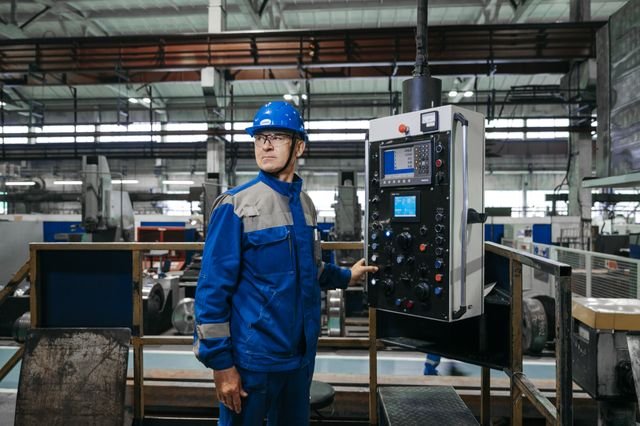
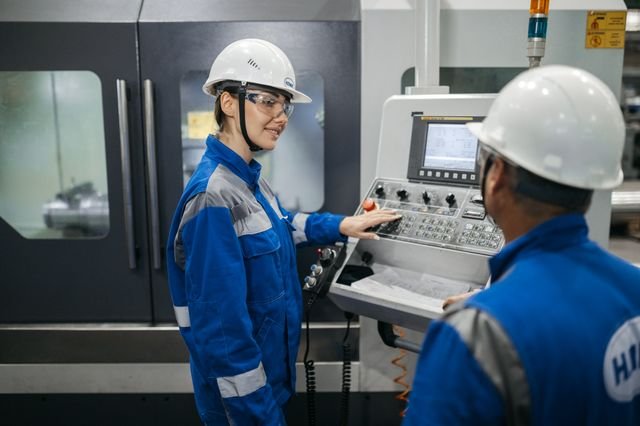
Automated control systems consist of several layers of control components. To understand how such a system works, one has to be aware of its architecture. Programmable Logic Controllers form an execution layer of automated control systems. They continuously repeat the cycle of scanning inputs from field devices, processing the control logic programme and writing outputs back to the controlled devices. In process-intensive applications, when the coordination of multi-loop control is needed, distributed control systems are used. SCADA system sits above PLCs and DCS and takes care of data acquisition from field devices, alarm management and providing the operator with a remote view of the asset state in wide geographic locations. Human Machine Interface terminals provide the human operator with an interface to the system.
Integration Challenges on Sites That Were Not Designed for This
Introducing automated control systems into an existing operational site is more complex than a greenfield installation, because the new system must communicate with what is already installed without disrupting production during the transition. New hardware communicating with older field devices requires protocol bridging, careful commissioning sequencing, and thorough testing before any live cutover occurs. Staged implementation allows the transition to proceed section by section, with the remaining existing system kept operational until each new section is ready and verified.
The consequences of poor integration planning are not theoretical. A failed cutover on a continuously operating site creates an outage that affects production, safety, and in critical infrastructure contexts, community supply. Testing before installation, rather than discovering integration problems during commissioning on a live site, is where the engineering work pays off.
Remote Operation and the Network Security It Demands
The remoteness created by Perth’s geographical location makes it necessary to consider a requirement for remote operations that is more relevant to Perth than to most other cities in Australia. A mine, a pumping station, or even a treatment facility may be several hundred kilometres away and need to be controlled and monitored using a network which is, in itself, safe. The effective use of remote systems requires the use of firewalls and password-protected connections with well-defined access levels for various operator profiles. Operational technology networks transporting control signals have to be isolated from corporate IT networks as much as possible to minimise vulnerabilities to external threats.
Communication redundancy becomes extremely important when operating remotely. Any single path connection loss that results in a lack of SCADA information becomes a problem which cannot be rectified easily manually, especially when there is an operational time lag involved when responding from another location several hundred kilometres away.
Choosing the Platform for the Long Term
The industrial market of Perth involves numerous vendors. ControlLogix and CompactLogix are often seen in general industrial or manufacturing applications. In the process industry and utilities, one can encounter Siemens’ S7-300 and S7-400. Honeywell and Yokogawa are seen in oil, gas, and chemical processing. For applications requiring an open-standard environment, one can find Modicon products from Schneider Electric. Spare parts availability and local support depend on the chosen platform. Since the chosen system will be maintained by engineers who are not familiar with the commissioning of the system, platform selection is based not only on the availability of local support but also on the road map of the vendor.