






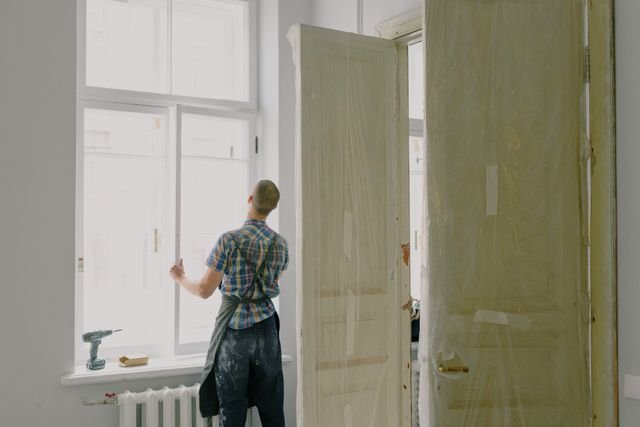
The budget process for renovating homes in Melbourne usually follows the same pattern: kitchens get renovated first, then the bathrooms, floors come after, and doors go last when the contingency budget is nearly depleted. The outcome is a renovated interior which is perfectly coordinated except for the one architectural detail without which there wouldn’t be any interior at all. There is something about neglecting that detail which cannot help but make itself noticed every single day.
The Decision That Gets Left Too Late
Doors play with proportions in a room. When a door becomes too narrow for a wide corridor, it looks like an afterthought. Doors that become undersized in relation to the height of a room are simply out of place and create a dissonance with the architecture that no painting can mend. Catalogue doors have dimensions that are suited for today’s construction. Older houses in Melbourne have entirely different ceiling heights and wall thicknesses than the modern standards, which is why catalogue doors never fit them well; this is where custom doors Melbourne specialists make a real difference.
Custom Made Is Not the Same as Made to Measure
It is important and often misunderstood. Made-to-measure works off a base form of door and makes modifications based on the limits of the core construction that are to be used, cutting a stile down, for example, to accommodate a smaller opening. Custom manufacture starts with the design, as the profile, panel layout, wood species, and overall size of the door are dictated by the brief and not by what is available in stock. In a period house or renovation where quality is the issue, the difference will show in the clarity of the moulding profile, the consistency of the reveals, and the fit when installed in the opening.
Why Timber Is Preferred?
There are performance characteristics of timber that other materials do not emulate as well. Timber is tolerant of seasonal movement resulting from humidity and temperature variations without surface cracking and joint failure. Timber can be repaired, refinished and repainted throughout its life. Well-designed and maintained solid timber doors have long life spans that exceed most renovation life spans. Where the existing joinery is timber, using a different core material creates a visual and tactile inconsistency. This detracts from the harmony of the interior.
Internal and External Doors Have Different Specifications
While they might appear to be alike from a distance, there is a significant difference in the performance characteristics that need to be taken into account with an external door. Weatherproofing at the junction with the frame, the appropriate bottom seal, choice of species and finish system that is appropriate for UV exposure, moisture, and temperature variation, and hardware that is suitable for an external application are required. The thickness of the door in an external application should be greater than internal specifications to provide rigidity and weatherstrip compression.
Leadlight and Glazed Panels in Period Homes
Leadlight panels are one of the identifying features of a period house door in Melbourne. The correct use of such panels in renovation or replacement requires careful matching of glass colour, lead profile width, and panel geometry with existing work. Leadlight panels for contemporary doors use proportions that are awkward in a pre-war façade.











Comments are closed.