




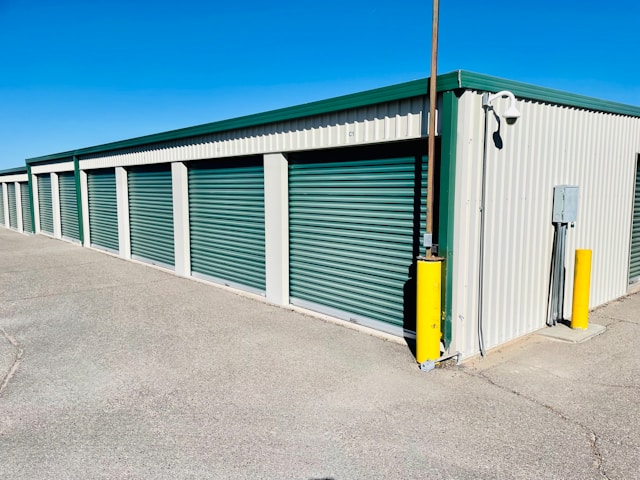
Without a doubt the most predictable, but expensive challenge for Australian retailers is peak season stock. When there are massive volumes of stock moving into really tiny windows like Christmas, Black Friday, Cyber Monday, end-of-financial-year sales and major promotional events. Retail turnover for December 2024 was 4.6% higher than a year earlier (ABS data) and online sales rose 12.7% YOY. Businesses will then have to keep a lot more in stock before demand occurs, and they must store them somewhere. For many people that somewhere is the problem here.
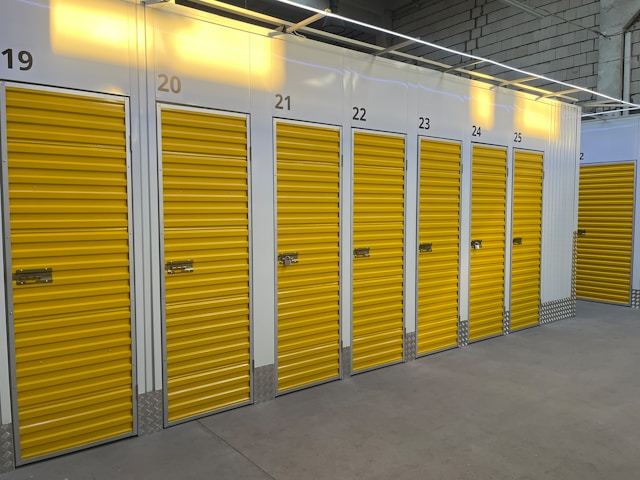
Why Permanent Warehousing Is The Wrong Answer For A Seasonal Problem?
The cash flows of a traditional warehouse lease are such that even though the demand is unevenly distributed across the space (the retailer could be requiring three times as much capacity six weeks around Christmas as they normally would, and then fall back to normal requirements), the retailer is still paying for the capacity during the other 50 weeks of the year when it is not required! With these high rents, it’s also more costly for companies to keep spaces unused for the 10-month period of the year when they aren’t in use.
But mobile self storage units reverse that scenario and transform a fixed occupancy cost into a variable value of operations, in the form of paying for any space that any business might require during a specific time periods typically six to twelve weeks. Small and medium-sized businesses operating on tight profit margins at this point during their business cycle have to make not just a property decision, but a cash flow decision regarding whether or not their business will have the money in its budget to invest in stock, marketing and staff when it really and truly matters.
Storage Bottlenecks Slow The Whole Supply Chain, Not Just The Warehouse
When peak times exceed storage space, congestion occurs from the warehouse floor to the receiving areas, delays stock processing and does not keep up with the meeting of the stock replenishment cycle required by promotional demand. Delay and inefficiency in the system of orders are proven to occur regularly due to storage constraints, simply because each delay is spotted by one customer anticipating a shipment that has not yet arrived. The cost of storage doesn’t usually reflect the cost of wastes that are a choke point.
Temporary storage units can be used as overflows, separating the fastest-moving inventory from the reserve stock, which frees up pressure on the main warehouse, creates visibility between both and gives operational teams the flexibility to service high velocity lines without needing to contend with low velocity stock, thereby enhancing pick accuracy and throughput when a mix of fast and slow-moving items is required. It’s not just making room for overflow, it’s making it all possible for primary space to operate even better than it would in a much smaller time-consuming rush of inventory all in one place.
E-Commerce Has Made The Seasonal Spike Sharper And Harder To Absorb
For businesses that are using digital channels in online retail, inventory management is even tougher. When there is an increase, or surge, in demand due to a promotional campaign, demand is absorbed by physical stores (and the debit and credit card network obviously), through physical space, and demand is absorbed by online fulfilment centres, through a perceived lack of supply, until they reach capacity; ABS figures confirmed that online sales surged over the past twelve months to more than AUD 4.4 billion last December and are growing at a rate that exceeds most operators’ permanent space. This surge of inventory allows it to be temporarily placed in a temporary “cumulating storage” facility near fulfilment centres without the need for a long-term investment in a warehouse.

When Temporary Storage Is Appropriate – And When It Is Not?
The advantages of mobile storage are dependent on the nature of the pattern of demand and its predictability: If the demand pattern is highly seasonal (the majority of revenue generated at well defined promotional times throughout the year) then the flexibility of scaling to suit the pattern offers better value than optimization of the permanent operations of a warehouse; whereas if the pattern is not that focused on particular promotions (the majority of sales throughout the year) then adding additional warehouse locations offers little real value and introduces additional logistical complexities.
The first group will have to be evaluated on more than just storage costs, but on total logistics cost—transport between locations, extra handling labour, new technologies adapted to the environment, and the discipline required to maintain accurate stock at multiple locations. While certainly a viable answer to a real problem and not merely a quick and dirty way to get over the space constraint issue, it is best used as an inventory management program rather than the “solution” to a space constraint situation. Businesses taking the most effective use of it make preparations before the peak.